한국어
 Bahasa Indonesia
 ไทย
 中文 (中国)
 Tiếng Việt

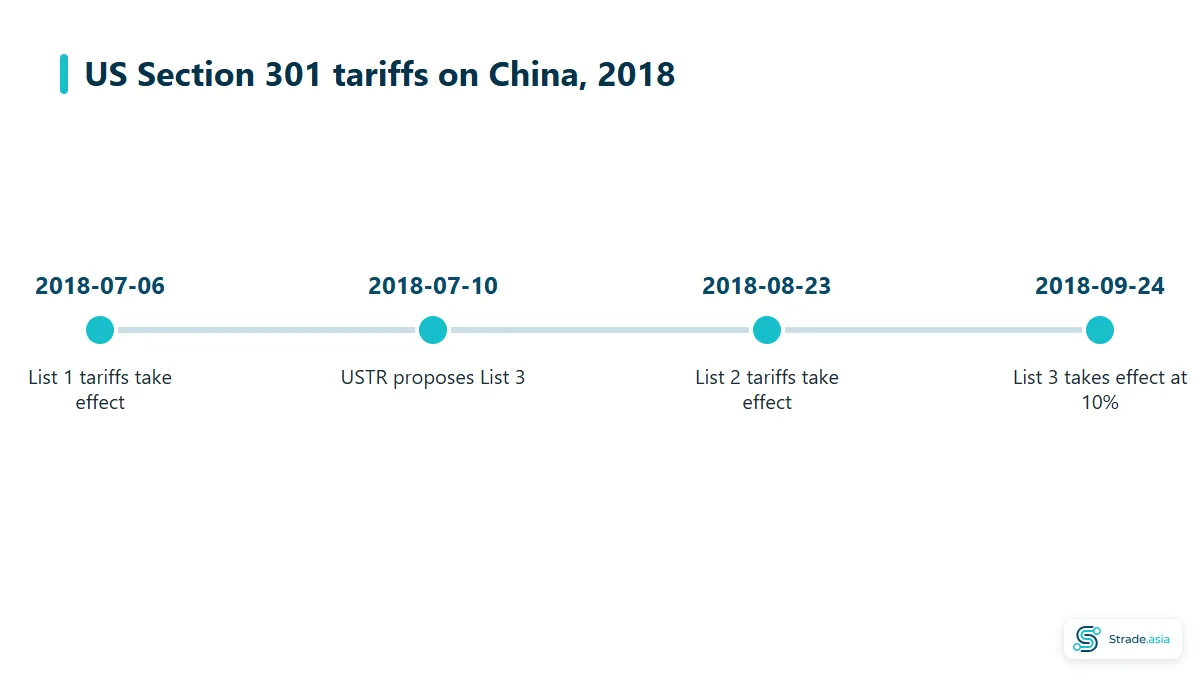
On 24 September 2018, the United States began applying a 10% tariff to a third list of Chinese imports, worth about USD 200 billion according to USTR. Under the current schedule, the rate on this list is due to rise to 25% on 1 January 2019. Together with the first two lists, which took effect in July and August at 25%, a large share of US imports from China now carries an additional duty. China has responded with tariffs on US goods.
List 3 covers a much wider range of goods than the first two lists, including many electrical and electronic products and parts. For many companies the question is no longer whether the tariffs affect them, but where to build products for the US market. Several manufacturers have said publicly that they are reviewing production locations, and Vietnam is often on the shortlist, alongside Thailand, Malaysia and other countries in the region.
Moving assembly is not enough
A product does not become Vietnamese just because its last step happens in Vietnam. As we explained in our note on Section 301 tariffs, US customs generally looks at where a product was last substantially transformed. A product built from Chinese sub-assemblies, such as finished circuit boards brought in only for final assembly and testing in Vietnam, may still be treated as Chinese and pay the tariff. Moving board assembly itself usually makes a stronger case, but each product is judged on its own facts. Companies planning a move should:
- Define which processes will take place in Vietnam, and assess for each product whether they amount to substantial transformation.
- Consider asking US Customs and Border Protection for a binding ruling on key products.
- Keep records of bills of materials, process steps and costs that support the origin claim.
- Avoid any arrangement that relabels or transships Chinese goods. Penalties are severe, and scrutiny of new export flows from the region is likely to grow.
Vietnamese certificates of origin follow their own rules: Form B for non-preferential origin, and separate forms for each trade agreement. A Form B does not by itself settle origin for US Customs. The CPTPP will add another set once it is in force. Origin needs to be designed into the supply chain from the start, not added at the end.
Sourcing for a new plant
A plant moving to Vietnam needs at least part of its supply base to move with it. Most electronic components used in Vietnam are still imported, from China, Japan, Korea, Taiwan and elsewhere. Remember that the US tariffs apply to goods entering the US, not to components imported into Vietnam. Practical points for buyers setting up new lines:
- Re-validate the approved manufacturer list. Parts approved for a plant in China may have been bought through local channels or from local brands. Check which makers can supply into Vietnam, through which channels and with what lead times, and qualify second sources where needed.
- Ask for origin data. Request country of origin on quotes, invoices and labels for components that matter to your origin calculation.
- Plan import formalities and duties. Decide whether the plant will operate as an export processing enterprise or under other customs arrangements, since this affects how components are imported, declared and taxed. An export processing enterprise generally imports components free of import duty; under other arrangements, a Form E under the ASEAN-China agreement can reduce duty on parts made in China. Agree Incoterms and who prepares customs documents.
- Expect longer lead times at first. New supplier relationships, new delivery routes and the continuing tightness in passive components mean the first months need extra cover. A new company with no purchase history may also come last when parts are on allocation.
- Build local support. Engineering help with alternates, incoming inspection and urgent buys matters more when your previous suppliers were a short truck ride away.
Watch the calendar
The planned rise to 25% on 1 January 2019 leaves a short window. Importers may bring shipments forward before then, which could add pressure on freight and on some components in the coming months. The lists and rates may also change as talks between the two governments continue. Plans for new capacity take longer than any of these deadlines, so base location decisions on your long-term costs and customers rather than on the next announcement.
How Strade can help
Strade supplies components to factories in Vietnam and across Asia, including plants starting new production. Our engineers propose alternates with matching specifications when parts are short or need re-sourcing, and we deliver DDP or DAP to factories and export processing enterprises with customs documents prepared. Our origin and export documentation service covers certificates of origin, Form E and HS code review.
Send us the BOM for your new line and we will check sources, alternates and origin information, or see how we work for manufacturers.