한국어
 Bahasa Indonesia
 ไทย
 中文 (中国)
 Tiếng Việt
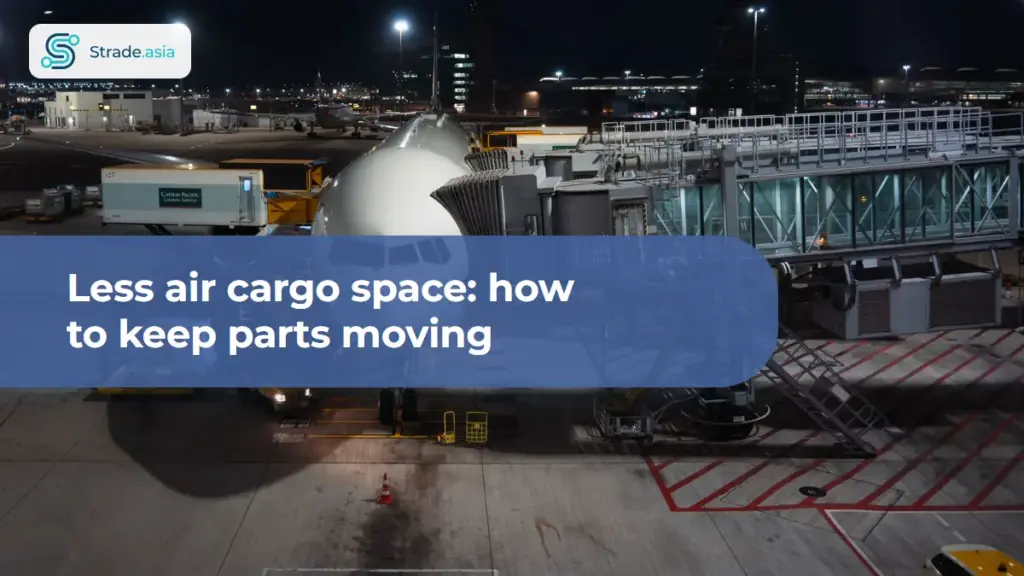
Electronic components travel by air more than almost any other industrial goods. They are small, valuable and often urgent, so a reel of ICs or a box of connectors is usually flown rather than shipped by sea. That habit is now being tested, as passenger flight cancellations take away much of the cargo space those shipments rely on.
Since the World Health Organization described COVID-19 as a pandemic on 11 March, many countries have closed borders or restricted travel, and airlines have cancelled a large part of their passenger flights. Vietnam has also restricted entry for foreign travellers, and airlines serving Vietnam have cut many international routes. Earlier this year, as we wrote in extended factory closures in China, the main problem was production. Now transport has become a constraint as well.
Why passenger flight cuts matter for cargo
A large share of the world’s air cargo does not fly on freighters. It travels in the hold of passenger aircraft, known as belly cargo. When passenger flights are cancelled, that space disappears with them. Dedicated freighters and express carriers are still flying, and some airlines have started operating passenger aircraft on cargo-only flights, but capacity on many routes is well below normal while demand for urgent shipments, including medical supplies, has risen.
The result is predictable: higher rates, fewer direct routings, bookings that roll to later flights and longer transit times. Rates are quoted for shorter periods, and surcharges can change at short notice. An air shipment that used to arrive in a few days may now take longer, and cost more, than planned.
What buyers can do
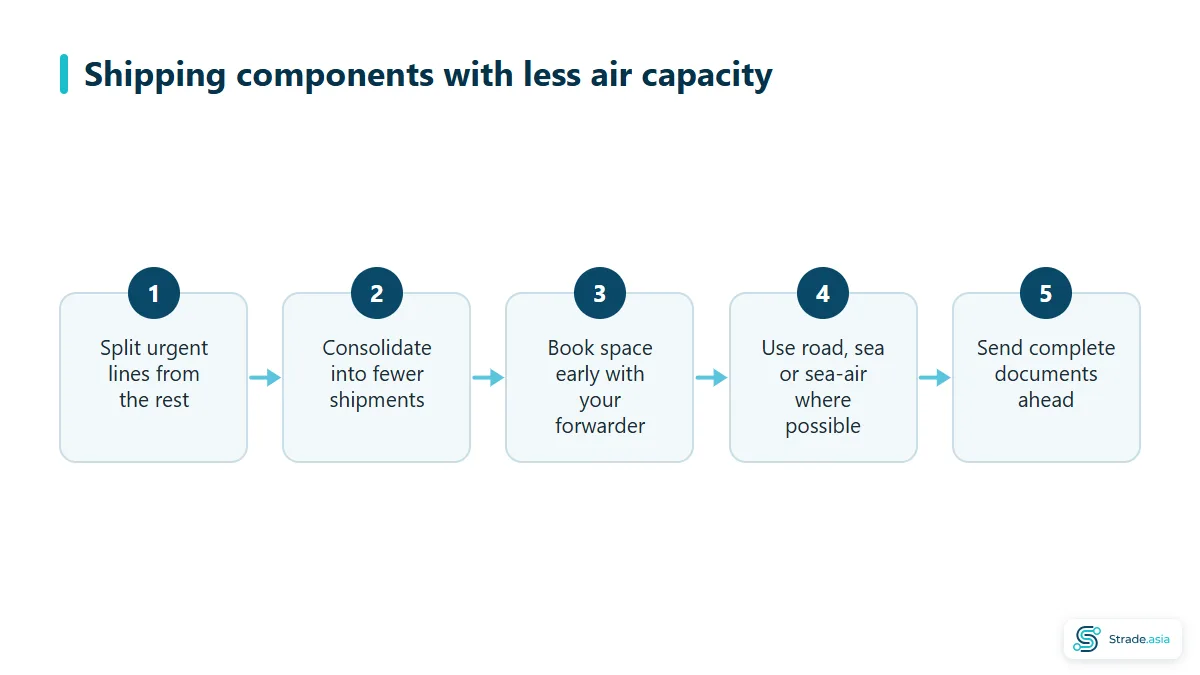
Separate urgent from important. Not every line needs to fly. Review open orders with production planning and mark the parts that would stop a line in the next few weeks. Those deserve air freight. Parts for later builds can go by slower, cheaper modes.
Consolidate. Many small shipments, each with its own minimum charge and booking, are harder to move than a few larger ones. Ask suppliers to group lines into weekly consignments, and ask your forwarder about consolidated services from main hubs such as Hong Kong and Singapore. For small, urgent consignments, compare express services, which run their own freighter networks, with standard air cargo, and check their surcharges and weight limits per piece.
Plan earlier. Give suppliers and forwarders longer notice. A booking requested a week ahead has a better chance of flying as planned than one requested on the day the goods are ready. Build longer transit times into your material planning for the coming weeks.
Use road, sea and sea-air where possible. For factories in Vietnam, especially in the north, trucking across the land border from southern China can carry parts when flights are full, although border checks add time. Sea freight within Asia is a realistic option for many components, especially for regular replenishment from suppliers in China, Taiwan, Korea or Japan. On some long-haul lanes, sea-air services move goods by sea to a hub with good air links and fly only the last leg. Parts shipped by sea spend longer in containers, so check moisture protection: dry packs, desiccant and humidity indicator cards for moisture-sensitive devices, as explained in moisture sensitivity levels.
Get documents right first time. A shipment that waits for a corrected invoice may lose its booked space. Send the commercial invoice, packing list, HS codes and any certificates to the forwarder and customs broker before the goods are ready. With many offices working remotely and courier times longer, agree in advance how paper originals, such as a Form E certificate of origin needed for preferential duty, will be sent, so that a missing original does not hold up clearance or the lower duty rate. Lithium cells and batteries need correct classification and documents under dangerous goods rules; see shipping lithium batteries and UN 38.3.
Check your Incoterms. Who books the freight and who pays when rates rise depends on the trade term. Under EXW or FCA, the buyer arranges the main transport and bears changes in rates; under CPT, CIP, DAP or DDP, the seller does. Freight is also part of the customs value in Vietnam, so higher air rates raise the import duty and VAT due at clearance. Our note on Incoterms 2020 summarises the rules.
A checklist for the next few weeks
- List the parts that must fly and the parts that can wait.
- Ask each supplier for the shipping point and the expected ready date of every open line.
- Agree consolidation and booking windows with your forwarder.
- Confirm documents before pickup.
- Update planners on realistic transit times.
- Keep a short daily list of shipments in transit and their status.
How Strade can help
Strade is an independent electronic component distributor with its own engineers, supplying factories in Vietnam and across Asia. Most of our orders are bought to the customer’s request, and many are urgent. We deliver on DDP or DAP terms to factories and export processing enterprises, prepare the customs paperwork, and pack parts in antistatic packaging with moisture control according to MSL. Our supply chain services cover sourcing, inspection and delivery to your plant.
If you need to rethink how urgent parts reach your line, send us the parts and the dates you need them and we will look at sources and shipping options.