한국어
 Bahasa Indonesia
 ไทย
 中文 (中国)
 Tiếng Việt
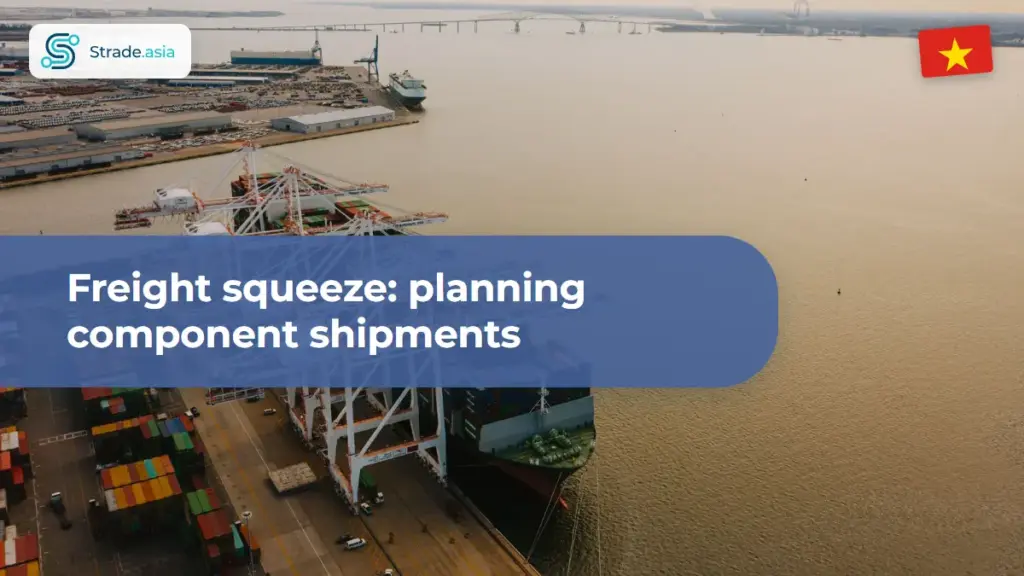
For six days at the end of March, the container ship Ever Given lay wedged across the Suez Canal. It was refloated on 29 March, and the queue of ships waiting at both ends has since passed through. But the blockage was only the most visible part of a problem that has been building since last year. Container shipping is short of boxes, short of space and far more expensive than before the pandemic, and the effects reach factories in Vietnam even when none of their cargo goes near Suez.
What is happening in container shipping
Since the middle of 2020, imports into North America and Europe have surged as households bought goods instead of services. Ships leaving Asia have been running full, while empty containers have piled up at the other end of the trade and come back slowly. Exporters across Asia, including many in Vietnam, have reported difficulty finding empty containers at all.
Congestion at major ports has made schedules less reliable: ships arrive late, some sailings are cancelled and some ports are skipped. Freight rates on the main lanes out of Asia are far above their pre-pandemic level, and carriers have added surcharges on top. The Suez blockage added another wave of delayed ships and bunched arrivals in Europe, which will take time to work through the system.
Air freight offers less relief than usual. With far fewer passenger flights, the cargo space in aircraft bellies is still much reduced, and air rates remain high, as we explained in air freight capacity and component shipments.
Which shipments are exposed
Most semiconductors are small and valuable enough to fly, so a large part of a typical BOM is not directly affected by sea freight. The exposure sits in:
- Heavy or bulky parts: transformers, power supplies, enclosures, cable, large capacitors and battery packs.
- Restricted goods: lithium batteries and some chemicals that face dangerous goods limits in air freight.
- Materials and packaging: PCBs, plastics, cartons and other inputs that usually travel by sea.
- Your own exports: if finished products leave by container, a missed sailing changes your build and payment plans too.
How to plan shipments now
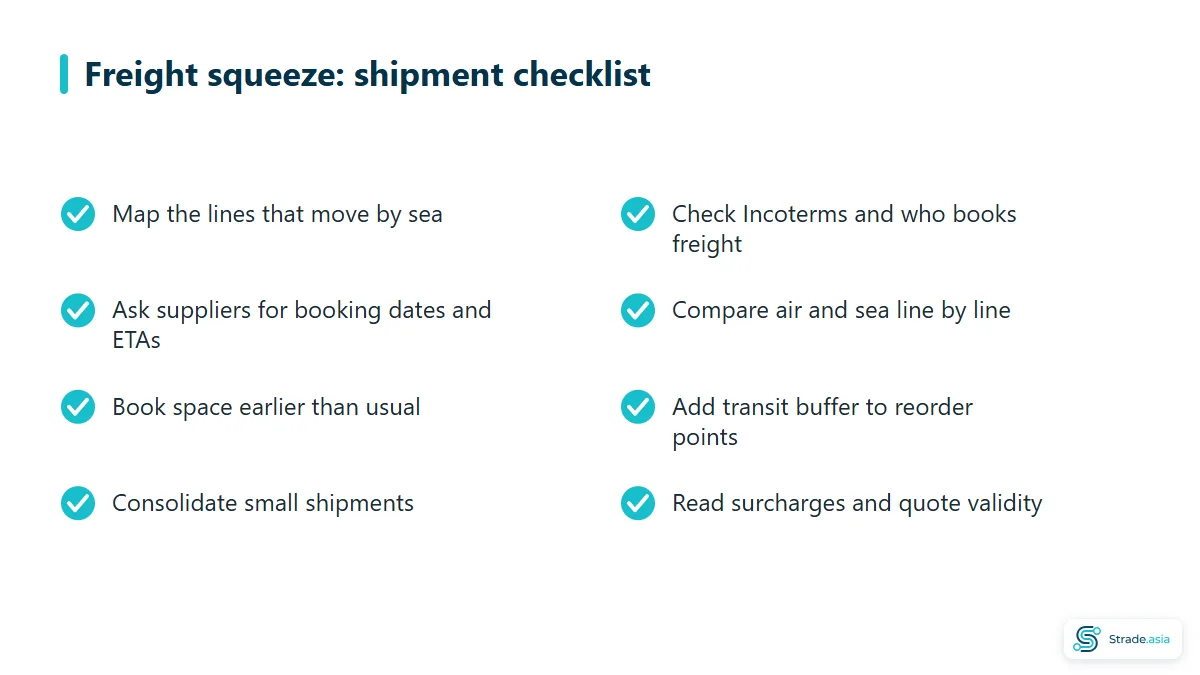
Book earlier and confirm more often
Space on popular sailings is booked well in advance. Ask suppliers when cargo is booked, not just when it is ready, and request an ETA rather than a ship date. Check those dates again a week before departure, because rolled bookings are common.
Consolidate
Many small shipments each carry fixed costs and each face a separate risk of delay. Combining orders from the same region into fewer, larger shipments, whether a full container or a consolidated LCL load, can lower the cost per unit and reduce the number of things that can go wrong. The trade-off is that you order earlier and hold more stock for a while.
Check who books the freight
Incoterms decide who arranges transport, who pays and who carries the risk of a sudden rate change. Under EXW or FCA you book the main carriage and absorb any surcharge. Under CFR or CIF the seller books the voyage but your risk passes at loading. Under DAP or DDP the seller manages delivery to your door, and the quote should say how freight changes are handled. Our summary of Incoterms 2020 sets out the differences.
Compare air and sea line by line
For small, high-value parts that would stop a line, the extra cost of air is usually far less than the cost of a stoppage. For bulky items, a split shipment with a small urgent quantity by air and the rest by sea can work.
Add transit buffer
Longer and less predictable transit times mean reorder points based on last year’s transit no longer hold. Add a transit buffer for sea freight lines, and review it monthly. The options for holding stock are covered in buffer stock and consignment.
What not to do
Do not over-order everything at once to beat the next delay. Freight space, warehouse space and cash are all limited, and the parts most at risk are only a fraction of the BOM. Focus on the lines that move by sea and would stop production.
How Strade can help
Strade is an independent electronic component distributor with its own engineers, supplying factories in Vietnam and across Asia. We source from manufacturers, their distributors and vetted open-market suppliers, and deliver DDP or DAP to your factory, including export processing enterprises, with customs documents prepared. Read more about our supply chain service.
If freight delays are putting component deliveries at risk, send us your BOM or the affected lines and we will look at the sourcing and delivery options.