한국어
 Bahasa Indonesia
 ไทย
 中文 (中国)
 Tiếng Việt
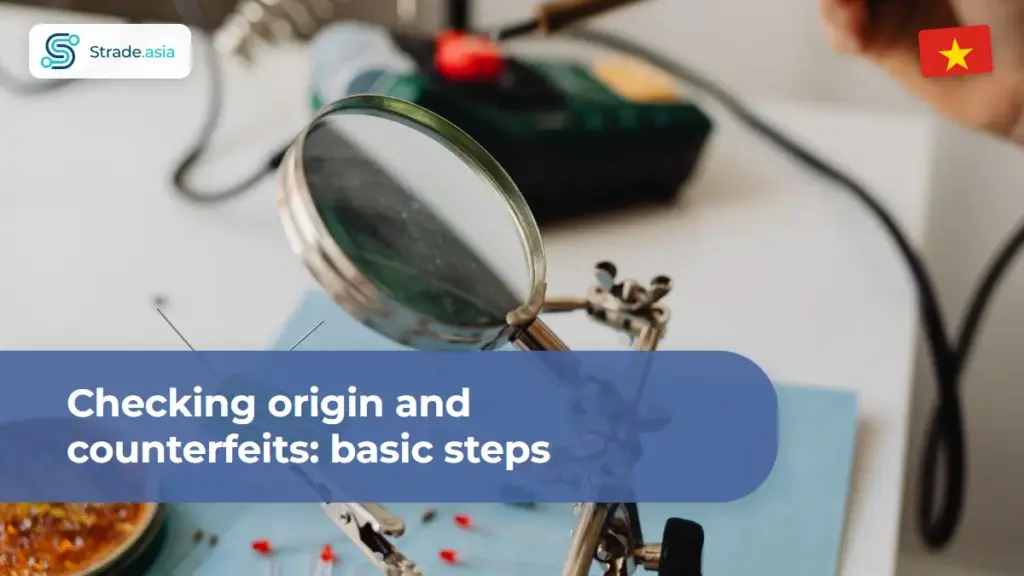
When a part is discontinued or in long shortage, a factory often has no choice but to buy on the open market, outside the manufacturer’s own distribution channel. That is where counterfeit, recycled and untraceable parts enter the supply chain. This article covers “origin” in two senses: tracing a part back to the company that made it, and the certificate of origin (C/O) customs may require. Then it sets out the basic checks a purchasing team and incoming quality control can apply.
The kinds of problem parts
- Remarked parts: the surface is sanded and re-marked, usually to turn a cheap part into an expensive one, or to change the temperature grade or date code.
- Recycled parts: pulled from used boards, cleaned, with leads straightened, then sold as new.
- Clones: another maker’s product carrying a well-known brand.
- Rejects: parts that failed the manufacturer’s tests but reached the market anyway.
- Genuine but badly stored: moisture-sensitive parts left open for a long time, which can crack during soldering.
Step 1: Check documents before you pay
- A certificate of conformance (CoC) and, where available, a document trail back to the manufacturer or its distribution channel.
- A packing list that matches part number, quantity, date code and lot.
- The right certificate of origin form if you need a preferential duty rate under a trade agreement.
- Photos of the actual stock, with labels and date codes, taken for your lot rather than generic pictures.
Step 2: Check packaging and labels
- The manufacturer label matches genuine ones in font, layout and colour, and the barcodes decode to the part number and quantity printed on the label.
- Moisture-sensitive parts are in a sealed moisture barrier bag with desiccant and a humidity indicator card, and the seal date makes sense.
- Reels, trays and tubes follow the manufacturer’s standard; several labels stuck on top of each other deserve a closer look.
Step 3: Inspect under magnification
- Marking and logo: sharpness, font, position, and resistance to a solvent wipe.
- Package surface: sanding marks, re-coating, and mould marks or pin-1 dots that differ from genuine parts.
- Leads: bent, scratched, oxidised, with traces of old solder or re-plating.
- Compare with a known-good sample if you have one.
Step 4: Check consistency
- Date code and lot on the label match the marking on the parts.
- The date code makes sense for the product’s life: there cannot be a date code after the manufacturer stopped making the part.
- Several date codes or marking styles inside one reel are a warning sign.
Step 5: Test according to risk
- X-ray: compare the lead frame, bond wires and die size with a known-good sample.
- XRF analysis of lead finish: reveals re-plated leads, or lead where there should be none.
- Decapsulation: shows the logo and part code on the die itself, for critical parts.
- Electrical and solderability tests, then a trial on a real board.
Not every lot needs every step. Low-cost passive components may only need document, label and visual checks; ICs and power devices for critical products should add X-ray and electrical tests. Industry standards such as SAE AS6081, AS6171 and IDEA-STD-1010 are useful references when building your own procedure. Our article on electronic component scams covers the warning signs in a supplier before you get this far.
If something looks wrong
Quarantine the lot, keep the original packaging and photograph everything as evidence, inform the supplier, and do not let the parts go back into the market. Counterfeits returned to a seller are often sold again to someone else.
How Strade works
Strade is an independent component distributor. We buy from manufacturers, their distributors and open-market sources that have passed our vetting, and we say plainly what we cannot supply. Each lot is checked on receipt for part number, label, date code, packaging and visual condition; sensitive parts, or any part a customer asks about, go to X-ray inspection or sample testing before the lot ships, as described on why Strade. CoC, C/O and CQ documents travel with the goods when the source provides them. For exports, our origin compliance service prepares certificates of origin and reviews HS codes.
Need a discontinued or hard-to-find part? Send a request for quotation and tell us the level of inspection you need for the lot.