
 한국어
 Bahasa Indonesia
 ไทย
 中文 (中国)
 Tiếng Việt
Batteries and Energy Storage
This group holds batteries and cells for equipment that must keep running without mains power: 12 V sealed lead-acid VRLA batteries for UPS units and alarm panels, 3.6 V lithium-thionyl chloride primary cells for…
| Part number | Description | Package | Datasheet | Availability, Quantity |
|---|---|---|---|---|
| GP12120CSB | Sealed lead-acid VRLA battery, 12 V 12 Ah (20 h), F2 Faston terminalBatteries and Energy Storage | 151 x 98 x 100.3 mm | On requestAdd | |
| GP12170CSB | Sealed lead-acid VRLA battery, 12 V 18.2 Ah (20 h), M5 bolt terminalBatteries and Energy Storage | 181 x 76.2 x 167 mm | On requestAdd | |
| GP1245CSB | Sealed lead-acid VRLA battery, 12 V 4.58 Ah (20 h), F2 Faston terminalBatteries and Energy Storage | 92.8 x 69.9 x 107.7 mm | On requestAdd | |
| GP1272CSB | Sealed lead-acid VRLA battery, 12 V 8.24 Ah (20 h), F2 Faston terminalBatteries and Energy Storage | 150.9 x 64.8 x 98.6 mm | On requestAdd | |
| GPL1272CSB | Long-life sealed lead-acid VRLA battery, 12 V 7.32 Ah (20 h), F2 Faston terminalBatteries and Energy Storage | 150.9 x 64.8 x 98.6 mm | On requestAdd |
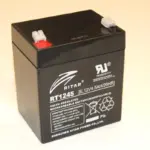
About Batteries and Energy Storage
This group holds batteries and cells for equipment that must keep running without mains power: 12 V sealed lead-acid VRLA batteries for UPS units and alarm panels, 3.6 V lithium-thionyl chloride primary cells for utility meters, trackers and memory backup, and high-power 18650 and 21700 lithium-ion cells for battery packs. Buyers usually search by chemistry and size first, then by capacity and the peak current the device draws.
How to choose Batteries and Energy Storage
- Chemistry: lithium-thionyl chloride primary cells cannot be recharged and suit years of low-current service; lithium-ion cells are rechargeable and need a protection circuit or a battery management system.
- Primary cells under pulses: bobbin-type cells give rated capacity only at low current and can show voltage delay after storage, so a pulsed load such as a radio may need a spiral cell or a cell paired with a capacitor.
- Lithium-ion cells: continuous and pulse discharge current, cycle life at that current, and the charge voltage and temperature limits the charger must respect.
- Size and termination: AA, C, D, 18650 or 21700, supplied as a plain cell or with solder tabs or PCB pins, to fit the holder or pack design.
- Transport documents: the UN 38.3 test summary and the safety data sheet, because lithium cells ship as dangerous goods.
Questions about Batteries and Energy Storage
Can a 3.6 V lithium AA cell replace an alkaline AA battery?
Not directly. The size is the same but the voltage is 3.6 V instead of 1.5 V, which can damage a circuit designed for alkaline or NiMH cells.
What do you need to quote lithium cells?
The part number, or the chemistry, size and termination, plus the quantity and the delivery address. Lithium cells travel as dangerous goods, so mention early if you need air freight.
Guides
Manufacturers in Batteries and Energy Storage
Related categories
Can’t find a part number?
Add it to your cart anyway. Our sales team checks sourcing for part numbers that are not in the online catalogue.